The project has begun functional testing in Aranjuez and is part of the Mobility for All program led by Ruta N and the Toyota Mobility Foundation.
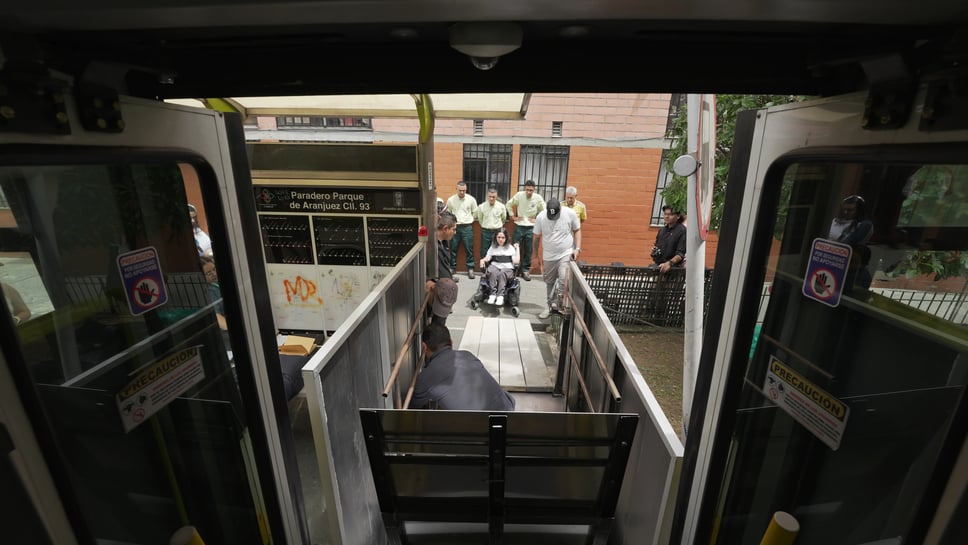
A lifting platform developed in Medellín using locally designed technology has begun testing with real users to improve access to public transportation for people with reduced mobility. The solution, created by Fundación El Comité with the support of Ruta N and the Toyota Mobility Foundation, aims to transform the way users board buses through a platform installed at bus stops that safely and independently brings passengers to the vehicle's entrance, overcoming the limitations of conventional ramps.
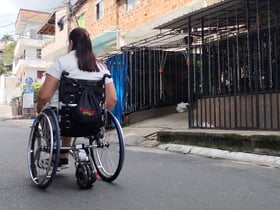
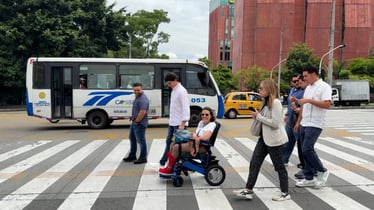
The technology integrates sensors, mechanical systems, hardware, and open-source software, and has already entered testing at a bus stop near Aranjuez Park in northeastern Medellín. The project has completed its design, manufacturing, and laboratory testing phases and is currently being evaluated by 24 users to validate its performance under real-world conditions. An estimated 2,500 people with disabilities live in this district, making it a community that could significantly benefit from innovations of this kind.
"Through the tests we have carried out so far, we have received valuable feedback from each of the users who have participated. Most of the responses have been positive, showing a real impact on people's lives. Users have highlighted the ease of boarding and exiting public transportation, as well as the time savings. This platform provides greater autonomy in the use of mass transit systems," explained Nelson Agudelo, project leader of Viaja Fácil.
One of the beneficiaries, Marisol Montoya, added: "Accessibility solutions that incorporate innovation and are tested with users are always aimed at reducing dependency. Any improvement in urban mobility accessibility benefits people with disabilities by allowing us not only to leave our homes, but to move through our daily lives more independently."
In addition to providing an alternative when bus ramps are unavailable or malfunctioning, the platform was designed using low-cost components and technologies such as Arduino microcontrollers, which manage the system's operation, and medical-grade electric actuators, devices that convert electrical energy into the mechanical movement required to lift the platform.
"At Ruta N, we believe innovation has real value when it transforms lives, and Viaja Fácil is an outstanding example of that. It demonstrates that knowledge, science, and technology generate the greatest impact when they are put at the service of people. Today, the Mobility for All program already benefits more than 200 users through five pilot projects currently underway and is moving into a new scaling phase to continue building a truly inclusive mobility system," said Simón Arango, Director of Strategic Projects at Ruta N.
The Mobility for All program supports five projects with a total investment of nearly COP 1 billion. Beginning in August, these initiatives will enter a scaling phase aimed at expanding their impact across the city. Through efforts like these, Ruta N and its international partners continue to promote science-, technology-, and innovation-based solutions that position Medellín as a living laboratory for developing technologies with social impact and improving the quality of life of more people.
Download the press kit here