





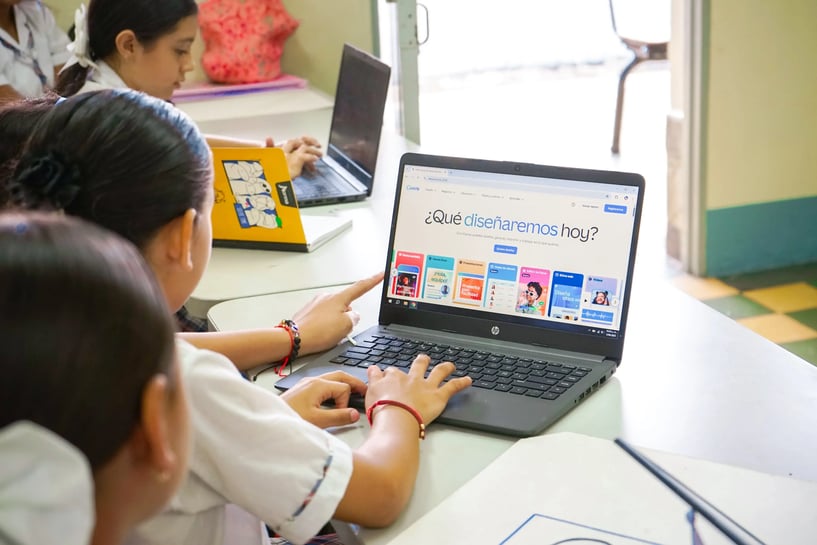
More than 5,000 students from schools in Medellín tackle city challenges through science, technology, and innovation
By Ruta N -Ruta N’s Generación Tech program reaches 208 educational institutions across the District.
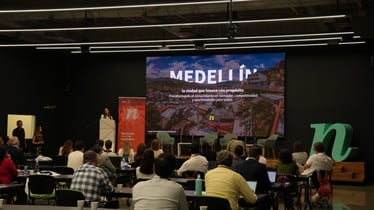
More than 5,000 students and 417 teachers from 208 public and private educational institutions in Medellín are part of the third edition of Generación Tech, Ruta N’s program that achieved a historic milestone this year: participation grew by 725%, increasing its impact sevenfold.
Through this strategy, the organization aims to strengthen skills in science, technology, and innovation with a practical approach focused on solving everyday challenges. This time, the program reached all 16 comunas and the five rural districts (corregimientos) of the city for the first time. This coverage allows more children, youth, and educators to access training in digital competencies and innovative methodologies connected to community needs.
“With Generación Tech, we continue to strengthen Medellín’s innovation ecosystem by inspiring new vocations in Science, Technology, Engineering, and Mathematics, closing knowledge access gaps, and empowering new generations as agents of change in their communities,” said Ruta N CEO Carolina Londoño.
Student training lasts 56 hours and follows a methodology based on Design Thinking, Challenge-Based Learning, and the STEAM approach (integrating Science, Technology, Engineering, Arts, and Mathematics). Throughout the process, participants move through stages of exploration, ideation, prototyping, validation, and communication, enabling them to transform ideas into concrete solutions with local impact. The challenges they address include digital security, access to healthcare, mobility, water conservation, waste management, classroom innovation, civic participation, and tourism, among others. This dynamic incorporates technologies such as artificial intelligence, the Internet of Things, robotics, blockchain, and 3D printing.
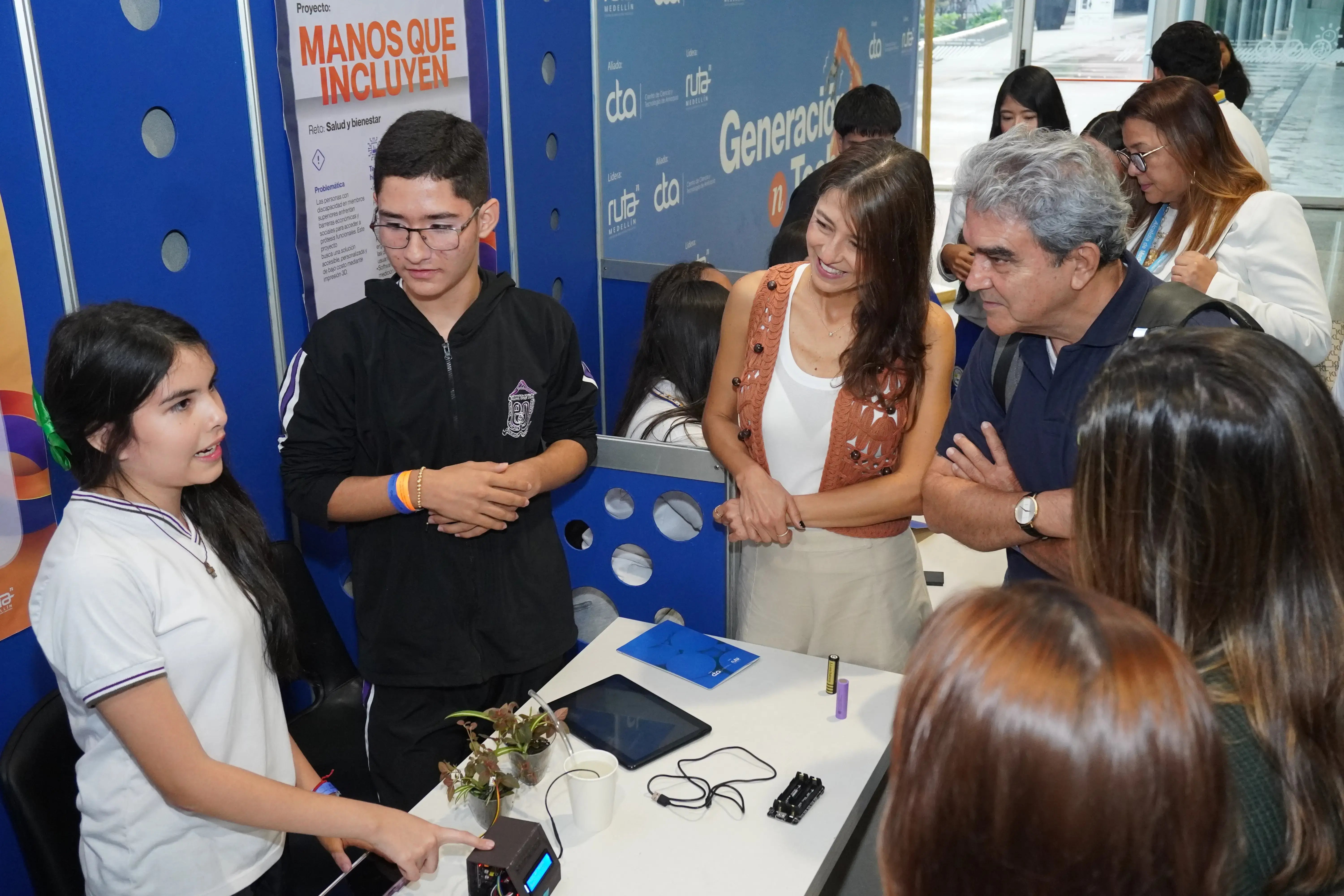
“They have taught us how to use artificial intelligence to create logos and brands, and also how we can use these tools to solve city problems. My expectation is that we can learn more to apply these tools in our daily lives,” said Emmanuel Álvarez, a student at Institución Educativa Juvenil Nuevo Futuro.
The program also promotes the role of teachers as agents of educational innovation. Through an 18-hour training pathway, combining in-person and virtual sessions, educators integrate new tools and methodologies into their teaching practices.
“We aim to create innovative experiences and new teaching methodologies in the classroom. For example, in Social Sciences we have implemented artificial intelligence to address coexistence issues,” said Mónica Berrío, a teacher at Institución Educativa Juvenil Nuevo Futuro.
Since its first edition, Generación Tech has exponentially expanded its impact: in 2024 it engaged 867 students and 150 teachers, while it now reaches more than 5,000 students and 417 teachers. Additionally, the program fosters connections with the innovation ecosystem through the GENTECH Community, a network that links students, teachers, universities, companies, and experts.
Generación Tech 2026 will conclude with a fair where students will present their solutions to key ecosystem stakeholders, showcasing young talent and their capacity to contribute to the transformation of the District. Through initiatives like this, Ruta N reinforces its commitment to integrating education, technology, and territory to position new generations as key players in building real solutions for their communities.
Download the press kit here



-1.jpg?width=374&height=210&name=Academia%20-%201%20(1)-1.jpg)